A bathroom can look polished on day one and tired six months later if the decor was chosen without humidity in mind. Steam, splashes, and slow-drying surfaces are harder on finishes than ordinary living spaces, so good bathroom decor ideas need to balance style with materials that can cope with moisture. The goal is not to make the room feel clinical. It is to choose accents that stay attractive when the mirror fogs, towels get damp, and the room is used several times a day.
Start With Materials That Do Not Mind Moisture
The simplest way to make bathroom decor last is to favor materials that are less vulnerable to swelling, warping, staining, or lingering damp. Glass, glazed ceramic, porcelain, stainless steel, powder-coated metal, sealed stone, and moisture-resistant plastics are generally easier to maintain than unfinished wood, paper-based accessories, or highly absorbent decorative pieces.
Choose Art for the Actual Bathroom Environment
Artwork can make a bathroom feel finished, but ordinary paper prints in basic frames may struggle in a steamy room. For more humidity safe art, consider metal, acrylic, ceramic tile, or other moisture-tolerant surfaces. Framed prints can still work when they are glazed and positioned away from the shower or tub, particularly when the room has dependable ventilation.
Think in moisture zones. A print above the toilet or on a wall opposite the shower is usually exposed to less direct water than a piece beside an open shower enclosure. If a paper artwork is valuable or irreplaceable, save it for another room and use a more forgiving piece in the bathroom.
Use Textiles That Can Dry Between Showers
Soft textiles bring warmth to a room dominated by tile, glass, and metal, but they also hold water. Thick decorative rugs and heavy fabric baskets can stay damp longer than expected, especially in small bathrooms with limited airflow. Washable bath mats, lighter towels, and waffle-weave fabrics are easier to rotate, clean, and dry.
For small bathroom decor, a single attractive hand towel, a compact bath mat, and a shower curtain with a restrained pattern can provide enough color without filling the room with fabric. Avoid stacking large piles of decorative towels if they reduce airflow or simply collect moisture and dust.
Keep Countertop Decor Easy to Move and Clean
Bathroom counters collect water droplets, soap, toothpaste, and skincare residue. Decorative pieces should make cleaning easier rather than creating a maze of objects that traps moisture underneath. A small glazed tray can group daily products, while a ceramic cup, glass jar, or metal container adds texture without introducing a material that dislikes water.
Consider a shared bathroom with a 36-inch vanity. Instead of lining six bottles across the counter, keep the two or three daily-use products on one washable tray and move backups into a drawer or cabinet. The counter immediately looks calmer, and one lift of the tray gives you a clear surface to wipe dry.
Add Natural Texture Carefully
Rattan, woven baskets, wood, and natural fibers can soften hard bathroom surfaces, but use them selectively. A basket on a dry shelf can be a good place for spare toilet paper or clean towels. The same basket beside a shower may repeatedly absorb moisture and become harder to keep fresh.
If you like an organic look but want less maintenance, use ceramic accessories with stone-like finishes, sealed wood in dry zones, or metal accents in warmer finishes. These choices create texture without relying on highly absorbent materials in the dampest parts of the room.
Choose Accessories That Also Do a Job
The strongest bathroom accessories ideas combine decoration with function. A coordinated soap dispenser, wall-mounted hooks, a covered waste bin, a slim canister, or an attractive toilet brush holder can make everyday necessities feel intentional. In a compact bathroom, useful decor matters even more because every visible item competes for space.
Repeat one or two finishes rather than matching every object exactly. Brushed metal hooks can echo the faucet, while white ceramic containers can repeat the sink. This gives the room visual consistency without making it look like a boxed accessory set. Related topics such as small-space bathroom storage and bathroom lighting ideas also fit naturally when planning the overall look.
Use the Walls in a Small Bathroom
When floor and vanity space are limited, decorate vertically. A narrow shelf above the toilet, hooks behind the door, a mirrored medicine cabinet, or a slim wall-mounted organizer can add function without crowding the room. Keep open shelves edited; one or two purposeful accents usually look better than a row of objects that must constantly be moved for cleaning.
Ventilation Protects the Decor Too
Even moisture-tolerant accents perform better when the bathroom can dry after showers. Use the exhaust fan while bathing and for about 15 minutes afterward to help remove lingering moisture. If the room has an operable window and outdoor conditions are suitable, opening it can improve air movement as well.
Repeated condensation can keep grout, caulk, textiles, and nearby surfaces damp. If mildew or persistent condensation is common, solve the moisture problem rather than trying to hide it with new accessories.
Let Durable Basics Carry the Room
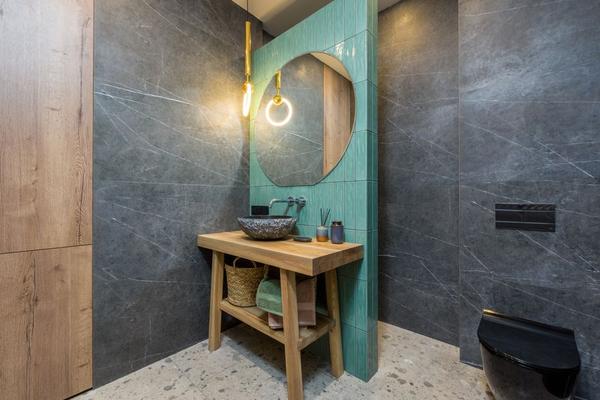
You can still use color and personality freely. Keep long-term surfaces and frequently wet accessories durable, then add replaceable accents through towels, a bath mat, a shower curtain, soap dispensers, and artwork. A neutral bathroom can shift from deep green to warm clay or soft blue without replacing fixtures or exposing delicate decor to years of steam.
FAQ
What decor is best for a humid bathroom?
Choose non-porous or well-sealed materials such as glazed ceramic, glass, stainless steel, powder-coated metal, acrylic, porcelain, and sealed stone. Keep absorbent pieces away from direct splash zones and make sure textiles can dry between uses.
Can I hang framed art in a bathroom?
Yes, especially on a wall away from direct water. Use a glazed frame and avoid placing valuable paper artwork in the steamiest area. Metal, acrylic, tile, and other moisture-tolerant formats are generally easier to maintain.
How do I decorate a small bathroom without clutter?
Use wall storage, limit countertop items, and choose accessories with a practical purpose. A compact tray, a few hooks, one narrow shelf, and coordinated towels can add style without reducing useful space.
What bathroom decor should I avoid?
Be cautious with unsealed wood, untreated paper, thick fabrics that dry slowly, and decorative pieces with hard-to-clean crevices. They may be usable in dry zones, but they usually need more care in a humid bathroom.
Choose Decor That Can Handle Daily Life
The best bathroom decor ideas still look good after months of steam, splashes, cleaning, and busy routines. Start with moisture-tolerant materials, keep textiles washable and quick to dry, and place sensitive accents in the driest parts of the room. Once those practical constraints are handled, artwork, color, and accessories can give the bathroom plenty of personality without turning upkeep into a constant chore.