Maximalism in 2026 is not simply a reaction against bare rooms and beige-on-beige minimalism. The version gaining attention now is more deliberate: rooms are layered with colour, pattern, books, art, textiles, and collected objects, but the choices are connected by a clear point of view. That is the heart of thoughtful maximalism. Instead of filling every surface, it asks you to build a room that feels expressive, personal, and visually rich without becoming chaotic.
Current design coverage points toward warmer, individual interiors, with pattern mixing, vintage pieces, saturated colour, and “collected over time” character replacing the idea that a stylish room must look pristine and restrained. Thoughtful maximalism fits that shift because it values personality as much as polish.
Start With a Story, Not a Shopping List
Strong maximalist rooms feel as though they belong to a particular person. Before buying anything new, decide what you want the room to communicate. Perhaps you love botanical prints, inherited ceramics, travel photography, dark wood, and jewel tones. Those preferences become the thread that connects everything else.
This is where maximalist decorating differs from random accumulation. A room can contain many objects and still feel coherent when they share a story, palette, era, material, or emotional connection.
Build a Colour Framework Before Adding More
Colour gives a layered decor style structure. You do not need to limit yourself to three shades, but it helps to choose a dominant family and let other colours play supporting roles. Deep green with burgundy, ochre, dusty pink, and dark timber can feel adventurous while still holding together.
Repeating colours in different places is one of the easiest ways to make a busy room look intentional. If a rug contains rust, blue, and cream, echo those tones in a lampshade, artwork, or cushion. The eye notices the repetition and reads the room as connected.
Mix Patterns by Changing Their Scale
Thoughtful maximalism often combines florals, checks, stripes, geometrics, or traditional motifs, but successful pattern mixing relies on contrast. Several small, equally busy prints can compete with one another. A large floral curtain, medium-scale check chair, and narrow striped cushion are easier to read because each pattern has a different visual weight.
It also helps to repeat at least one colour across different prints. The patterns do not need to match, but they should feel like they are having the same conversation. This is especially useful in eclectic interior styling, where pieces from different periods need a subtle bridge.
Use Quiet Areas to Make Bold Moments Stronger
A maximalist room still needs places for the eye to rest. That does not necessarily mean white walls or empty shelves. A solid-colour sofa, a stretch of painted wall, a simple timber cabinet, or a plain area of flooring can provide enough visual pause between more energetic elements.
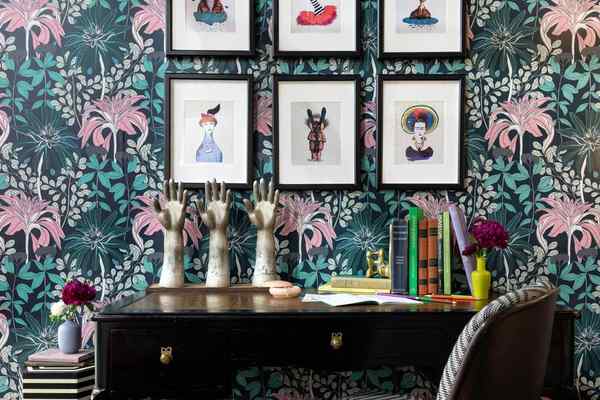
Think of contrast as part of the design. A gallery wall feels more dramatic when it has clear edges, and a colourful collection looks stronger when it is grouped rather than spread across every available surface.
Layer Texture as Carefully as Colour
Texture can create maximalist richness even in a restrained palette. Velvet, linen, aged wood, glazed ceramic, woven baskets, polished metal, stone, and glass all reflect light differently. Combining them makes a room feel dimensional rather than flat.
This is why neutral maximalism can still feel abundant. Cream walls, brown leather, a wool rug, carved timber, antique brass, and embroidered cushions may use quiet colours, yet their surfaces create depth. More does not have to mean brighter.
Display Collections With Editing and Rhythm
Collections are a natural fit for thoughtful maximalism, but presentation matters. Instead of scattering ten small objects around a room, group them so they read as a collection. Books can be stacked beside ceramics, while small framed works can become a compact gallery.
A practical example is a living room shelf filled with travel souvenirs. Rather than placing every item in one line, choose the strongest pieces, vary their height, add a few books, and leave small gaps between clusters. Rotate less important objects seasonally. The shelf still feels abundant, but each object has room to be noticed.
Let Vintage and New Pieces Balance Each Other
One reason current maximalist interiors feel warmer is the renewed interest in vintage and antique pieces. Patina, worn edges, old timber, handmade ceramics, and older textiles introduce history that mass-produced decor cannot easily imitate.
You do not need a period room. A contemporary sofa can sit beside an antique side table, and a modern lamp can work on a vintage chest. Mixing old and new supports the “collected over time” quality that defines strong maximalist decorating.
Choose One or Two Hero Moments
When everything demands attention, nothing becomes memorable. Give the room a hierarchy. The hero might be a patterned sofa, dramatic wallpaper, a large artwork, an ornate bed, or a densely arranged bookcase. Let secondary elements support that focal point rather than compete with it.
This principle is useful for beginners because it removes pressure to transform an entire room at once. Start with one expressive decision, then build outward slowly. A bold rug can establish the palette, while a favourite painting can inspire several surrounding colours.
Decorate Slowly Enough to Notice What Is Missing
Thoughtful maximalism benefits from patience. Rooms that look personal usually contain objects gathered over years, and trying to recreate that instantly can make a space feel staged. Live with each layer before adding another. Once the main furniture, rug, curtains, and artwork are in place, you may discover that the room needs better lighting rather than more accessories.
This slower approach also helps avoid trend fatigue. Choose pieces because they suit your home, not simply because maximalism is fashionable. Natural next topics include maximalist living room ideas, how to mix patterns in interiors, and decorating with vintage furniture.
Frequently Asked Questions
What is thoughtful maximalism?
Thoughtful maximalism is an intentional approach to layered decorating. It uses colour, pattern, texture, collections, and personal objects generously, but each choice contributes to a coherent story rather than simply adding visual clutter.
How do you stop maximalist decor from looking messy?
Create structure through repeated colours, varied pattern scale, grouped collections, clear focal points, and small areas of visual rest. Editing is still important; maximalism gives you permission to display more, not an obligation to display everything.
Can maximalism work in a small room?
Yes. Keep the layout functional, avoid blocking circulation, and concentrate decorative layers on walls, textiles, lighting, and a few purposeful surfaces rather than filling the floor with furniture.
Do maximalist interiors have to use bright colours?
No. Neutral maximalism uses the same principles through texture, shape, material, pattern, and collections. Browns, creams, charcoal, olive, muted red, and natural wood can create a richly layered room without vivid colour.
Make “More” Mean More to You
The best thoughtful maximalism decorating principles return to the same idea: abundance works when it has meaning. Repeat colours, vary patterns, mix old and new, create focal points, and give collections a reason to be seen. The result should not look like a showroom or a storage space. It should feel like a home whose layers reveal something about the people who live there.